Property
Every line of property,
moving faster.
Property leakage hides in the routine files — estimates that drift from what was paid, supplements nobody re-checked, ALE that outran the coverage. Hypermodel closes those gaps and keeps the whole book moving, on the claims system you already run.
01Where property leaks
The quiet files are the expensive ones.
A visibly bad claim gets attention. The leakage sits in the ordinary book — small variances, repeated at volume.
Supplement creep
Second and third supplements approved against the original scope without a fresh look — each one small, all of them compounding.
Estimate-vs-paid drift
What the estimate said, what the invoices claimed, what was actually paid — reconciled on the routine files, not just the escalated few.
ALE overruns
Additional living expense running past policy limits or the repair timeline — caught while it's still a conversation, not a write-off.
02Property-native standards
The flags a property desk answers for.
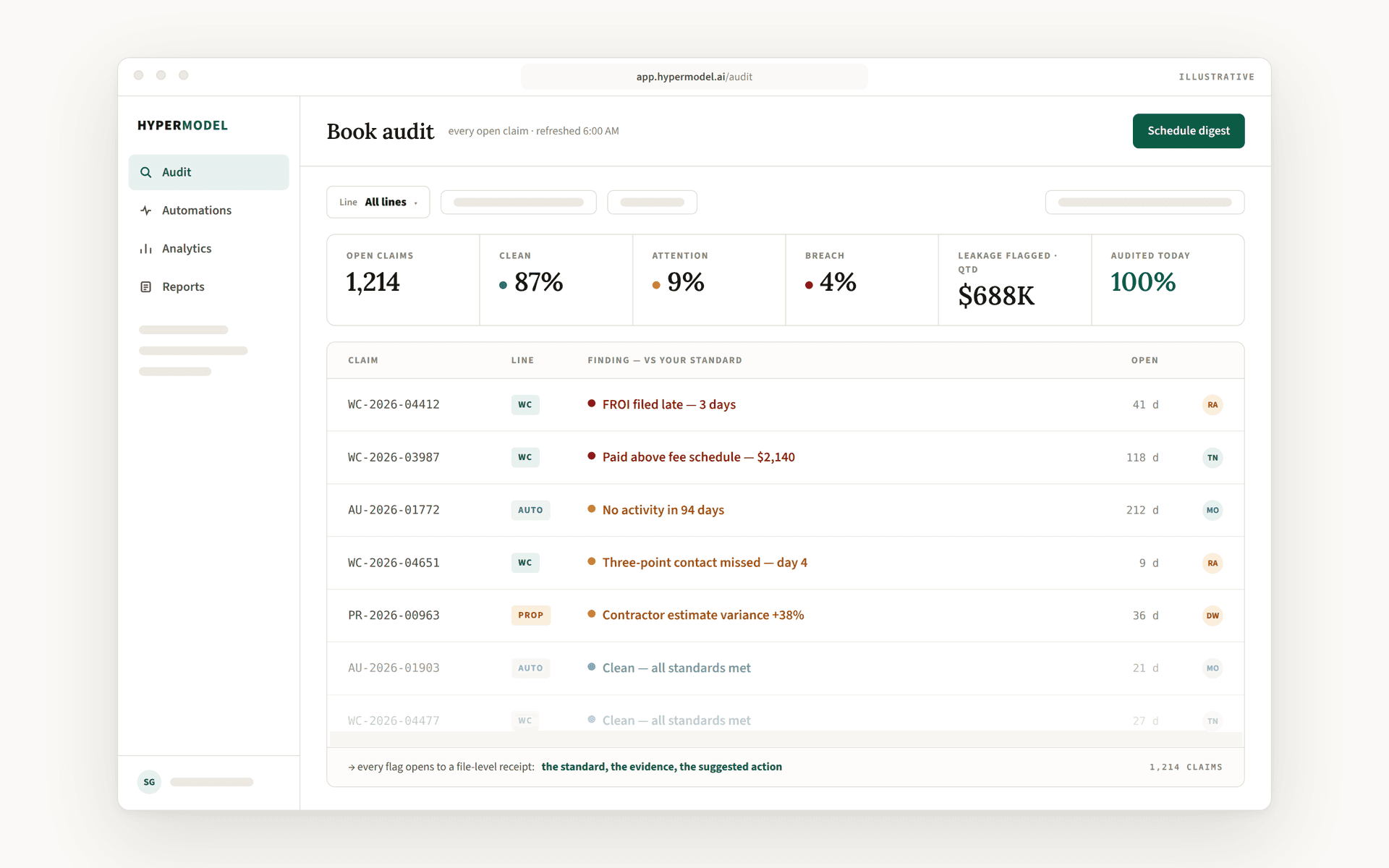
- Estimate-vs-paid variance, reconciled file by file (Xactimate-native)
- Supplement audit against original scope and cause of loss
- ALE tracked against limits and the actual repair timeline
- Coverage checklist applied before payment, not after complaint
- Contact and inspection windows met and documented
- Subrogation and salvage potential before closure
03Benchmarks
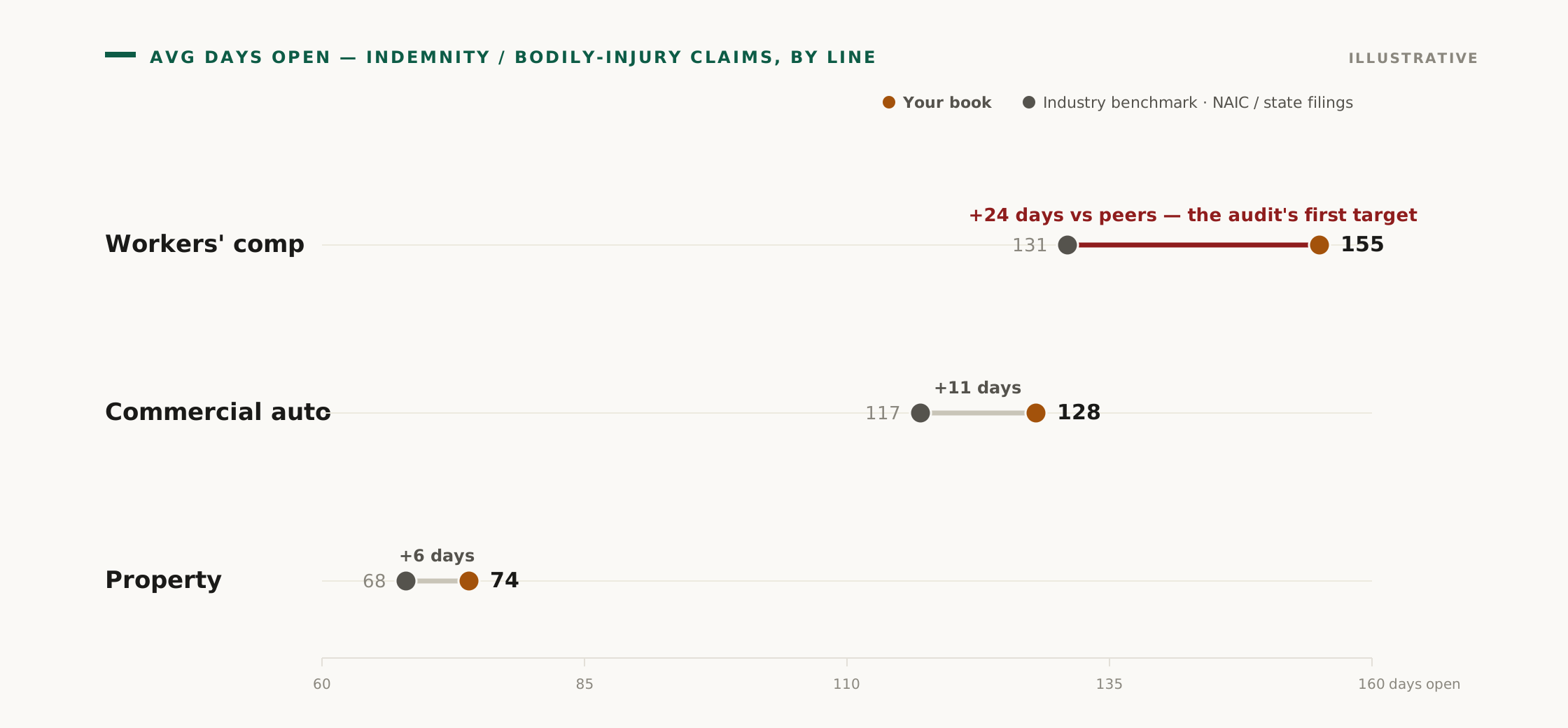
Cycle time vs. industry — by line.
Property cycle times against public benchmark data, crossed with your own book — the same measures, the same workbench, on every line you run.
04Getting started
Ready to lower your claims cost?
Start with a free audit of your property book. A closed-claims export is enough — cat season or ordinary book. The findings report is yours either way.